Releases that stay boring
Fast SDKs, typed flags, flags as code and rollouts that stop themselves when a metric turns. Kerf is built so on call engineers sleep.
Built like infrastructure
Under 1 ms evaluation
Rules are evaluated in process from a cached ruleset. No network call per check.
Typed flags
Generate types from your flag definitions so a renamed flag is a compile error, not an incident.
Flags as code
Define flags in your repo, review them in pull requests and sync with the CLI and Terraform.
Streaming updates
Changes reach SDKs in under a second over server sent events, with a polling fallback.
Dead flag removal
Kerf opens a pull request that deletes the code path for a flag that reached 100%.
Open telemetry
Evaluations emit spans and attributes, so a trace shows exactly which variant a request took.
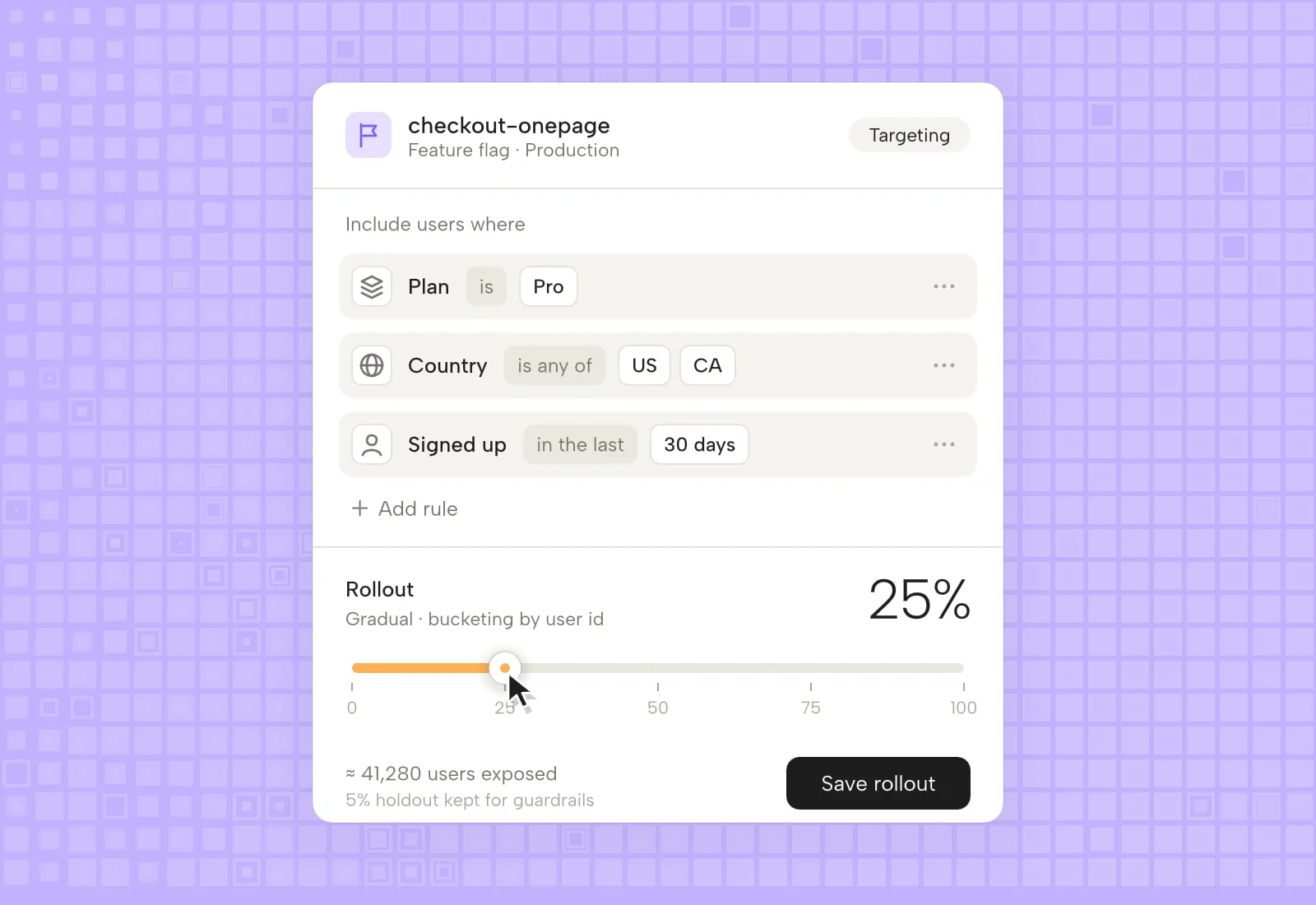
Rollouts with real gates
Wire error rate and latency from your observability stack into a rollout. The step only advances when the checks pass. If a deploy starts throwing, the flag reverts before the pager does.
- Datadog, Grafana and Sentry checks
- Approval gates for sensitive segments
- Audit log for every change
SDK footprint
| Runtime | Evaluation | Size | Offline |
|---|---|---|---|
| Node, Go, Java | Local, in process | Under 200 KB | Last known rules |
| Web | Local after bootstrap | 9 KB gzipped | Cached bootstrap |
| iOS, Android | Local, streaming | Under 400 KB | On disk cache |
| Edge | Local at the edge | 6 KB gzipped | KV snapshot |